





HDG Compact 30-149(E)
The HDG Compact 30-149 combines state-of-the-art technology with excellent design and maximum fuel flexibility.
-
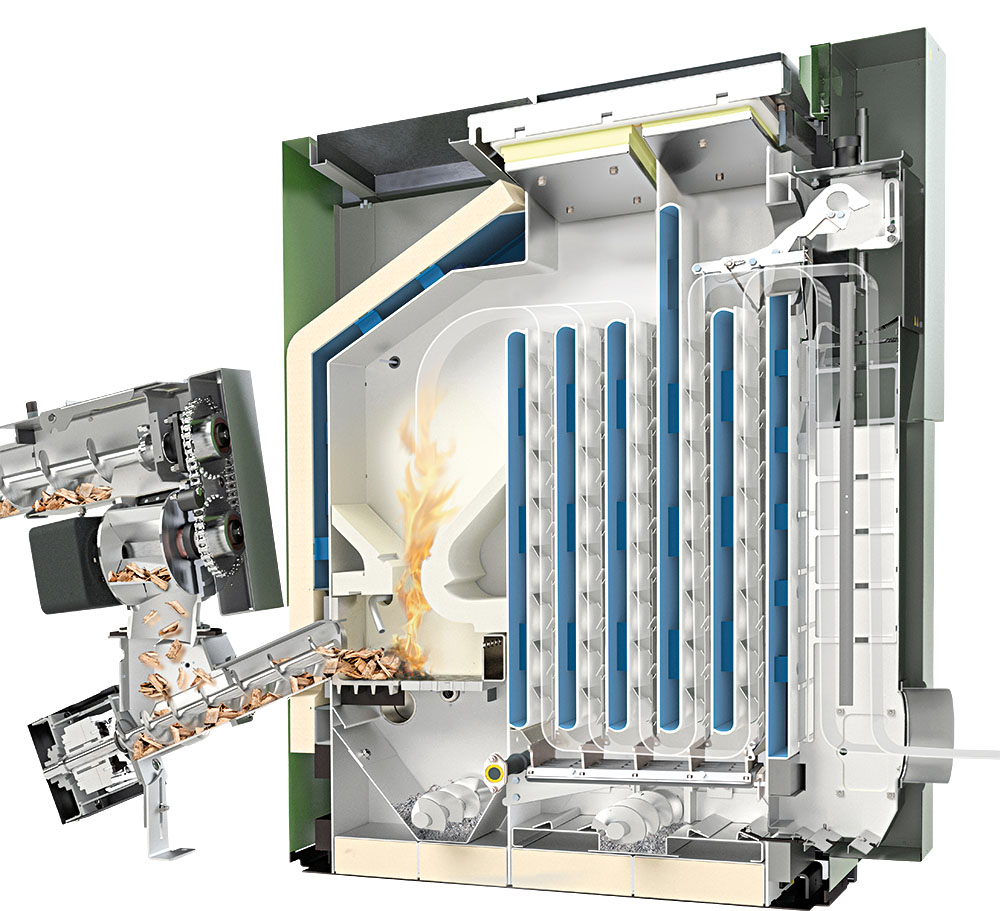
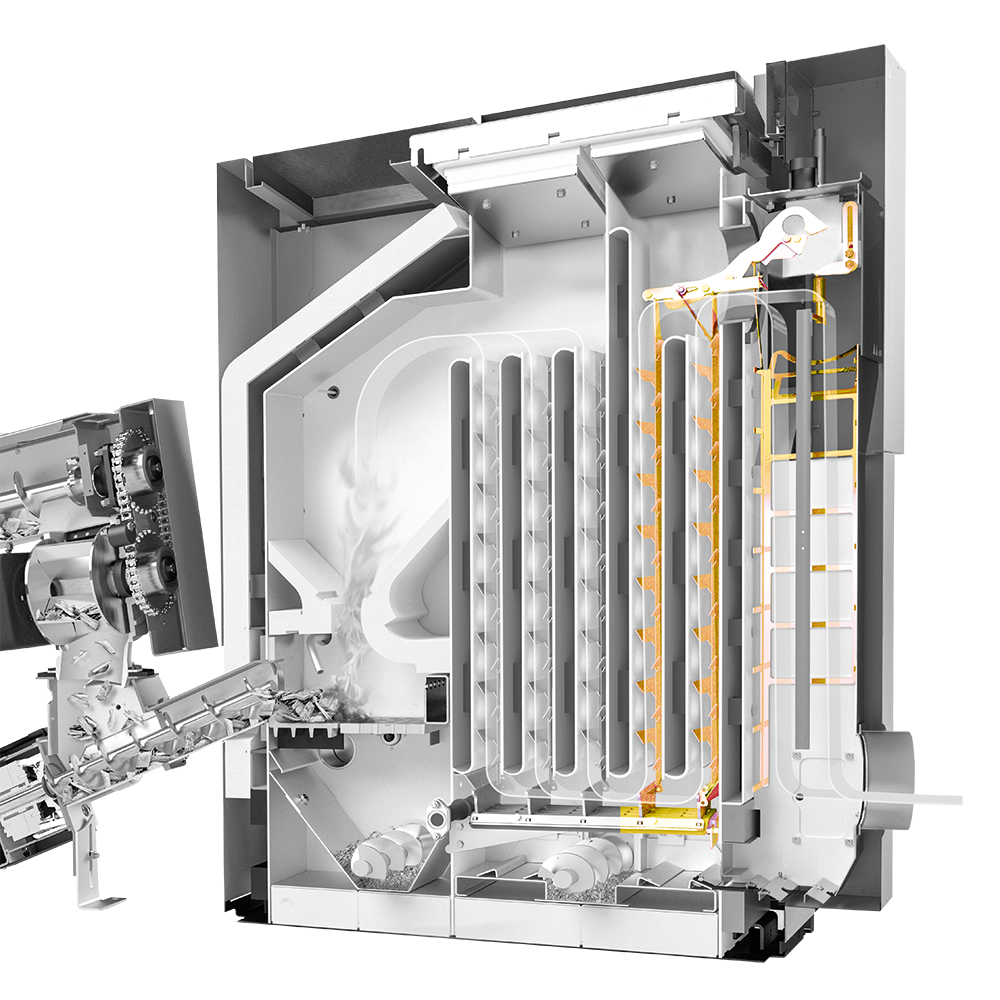
Inside view of the boiler
1
2
3
4
5
6
7
8
1 - Combustion chamber temperature sensor2 - Combustion chamber3 - Tilting grate technology4 - Automatic cleaning system5 - Lambda sensor6 - Automatic ash removal7 - Level monitoring8 - Optional fine dust separator -
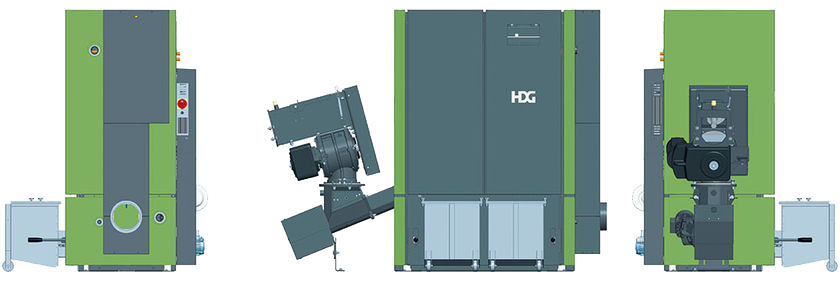
Technical data - Compact 30-95(E)
Compact 30(E)
Compact 40(E)
Compact 50(E)
Compact 65(E)
Compact 80(E)
Compact 95(E)
Nominal thermal power (kW) 30 40 50 65 80 95 Minimum thermal power (kW) 9 12 15 19,5 24 28,5 Boiler efficiency at nominal thermal power** 94,5 94,0 93,4 93,3 93,1 93,0 Flue gas temperature at nominal thermal power (°C) 140 150 160 180 160 180 Flue gas mass flow at nominal thermal power* (kg/s) 0,018 0,024 0,030 0,038 0,046 0,053 Water capacity (l) 167 167 167 167 230 230 Operating pressure (bar) 3 3 3 3 3 3 Flue draught requirement (Pa)*** 5 5 5 5 7 7 Maximum operating temperature (°C) 89 89 89 89 89 89 Flue gas pipe connection (mm) 150 150 180 180 180 180 Dimensions and weight
Compact 30(E)
Compact 40(E)
Compact 50(E)
Compact 65(E)
Compact 80(E)
Compact 95(E)
Height without attachments (mm) 1660 1660 1660 1660 1660 1660 Width with VBZ120 and filter (mm) 2060 2060 2060 2060 2385 2670 Depth with container (mm) 1300 1300 1300 1300 1320 1360 Weight (kg) 920 920 920 920 1200 1200 Energy label
Compact 30(E)
Compact 40(E)
Compact 50(E)
Compact 65(E)
Compact 80(E)
Compact 95(E)
Boiler energy efficiency class A+ A+ A+ A+ k.A. k.A. Boiler + controller energy efficiency class (class VI) A+ A+ A++ A++ k.A. k.A. ** Values according to type testing according to DIN EN 303-5 by TÜV-Süd
*** In conjunction with flue gas blower and negative pressure control -
Technical data - Compact 120-149(E)
Compact 120(E)
Compact 130(E)
Compact 140(E)
Compact 149(E)
Nominal thermal power (kW) 120 130 140 150 Minimum thermal power (kW) 36,4 39,7 42 45 Boiler efficiency at nominal thermal power** 95 94,4 94,4 94,2 Flue gas temperature at nominal thermal power (°C) 140 145 160 175 Flue gas mass flow at nominal thermal power* (kg/s) 0,074 0,083 0,088 0,093 Water capacity (l) 357 357 357 357 Operating pressure (bar) 3 3 3 3 Flue draught requirement (Pa)*** 5 5 5 5 Maximum operating temperature (°C) 95 95 95 95 Flue gas pipe connection (mm) 200 200 200 200 Maße und Gewicht
Compact 120(E)
Compact 130(E)
Compact 140(E)
Compact 149(E)
Height without attachments (mm) 1863 1863 1863 1863 Width with VBZ120 and filter (mm) 2706 2706 2706 2706 Depth with container (mm) 987 987 987 987 Weight (kg) 1760 1760 1760 1760 ** Values according to type testing according to DIN EN 303-5 by TÜV-Süd
*** In conjunction with flue gas blower and negative pressure control -
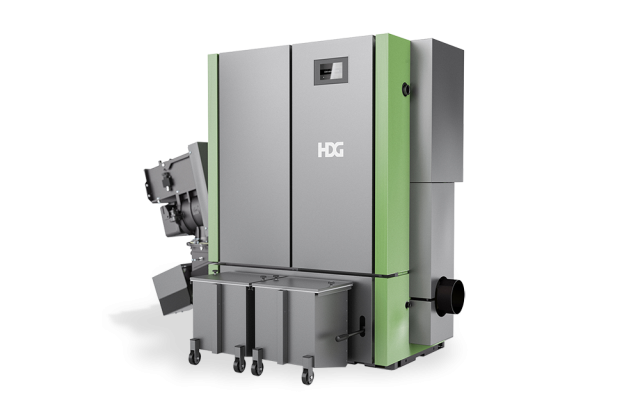
3D view


Impressive in every detail
The new version of the HDG Compact 30-149(E) wood chip boiler combines established technology with a range of technical enhancements. The improved PLUS cleaning system, standard ash removal, and faster installation through complete pre-assembly and a reduced number of connections are among the key features of the latest generation. An integrated fine dust separator supports operation with approved coarser and ash-rich fuels, subject to the applicable fuel specifications.
In short: From fuel feed to ash removal, the HDG Compact 30-149(E) offers practical solutions across the entire system design.
Efficient combustion chamber design
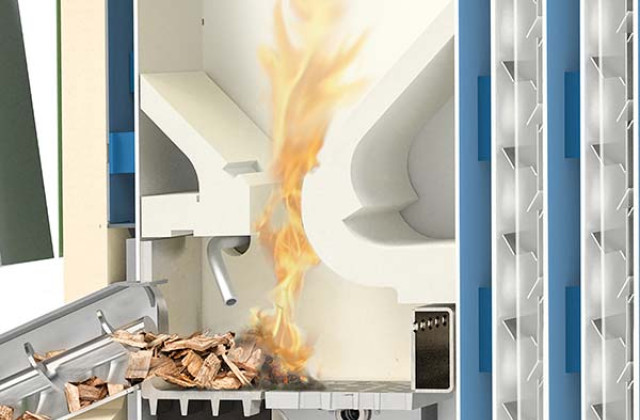
With its high combustion temperatures, the high-temperature combustion chamber supports stable combustion conditions during operation. The overfill protection with integrated safety shutdown via a heat-resistant stainless steel push-button tube contributes to safe operation during the combustion process.
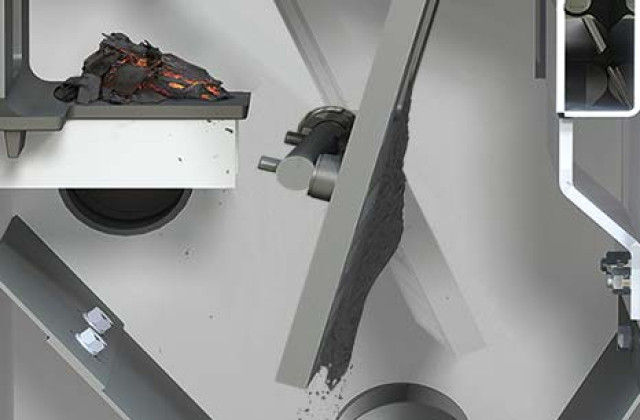
Tilting grate technology for automated ash removal
For ash removal, the tilting grate made of solid cast iron is tilted by more than 90 degrees. This helps remove combustion residues from the grate. The residual glow zone can support the continuation of the combustion process after the tilting grate has been closed.
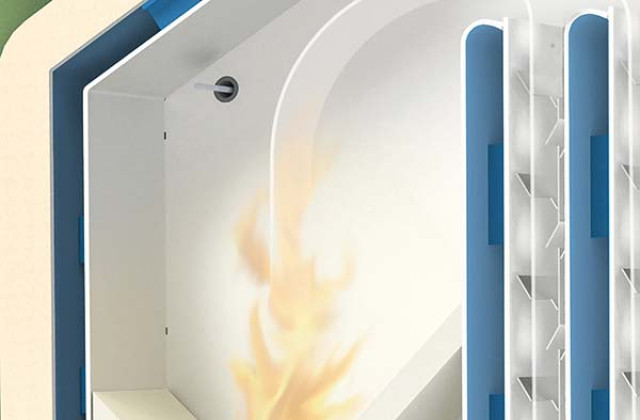
Combustion chamber temperature sensor protects the boiler
The combustion chamber temperature sensor supports stable operation within the intended power range, even with varying fuel quality, and helps protect components by limiting the combustion chamber temperature. Together with the lambda sensor, it supports controlled combustion and low emission levels during operation.
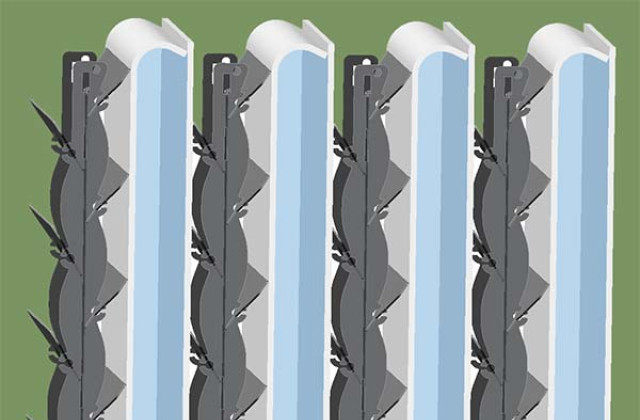
PLUS cleaning system: Heat exchanger surfaces kept clean
The new movable turbulators clean the heat exchanger surfaces thoroughly and help maintain heat transfer performance. Thanks to the new drive mechanism located in the cooler lower section of the boiler, accessibility has been improved and component durability can be supported.
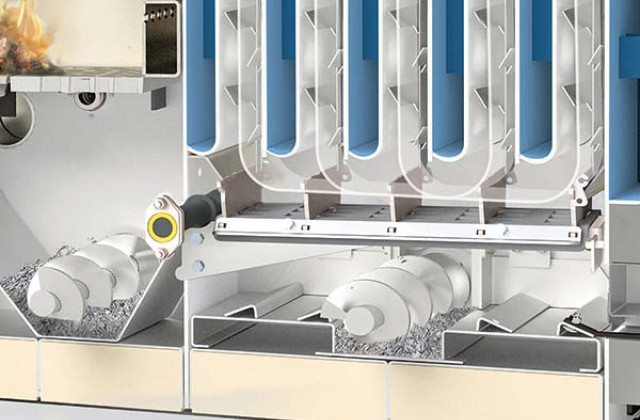
Automatic ash removal for enhanced convenience
Ash removal augers convey combustion residues from the combustion chamber, fly ash chamber and filter system automatically into the ash containers. There, the ash is compacted in large-volume ash containers, helping to reduce the frequency of emptying.
Practical ash container with Euro interface
The HDG ash container with Euro interface can be handled using standard tractors equipped with a compatible interface. The mechanical discharge system can simplify ash handling, while the large filling volume of 230 litres can help reduce emptying frequency.
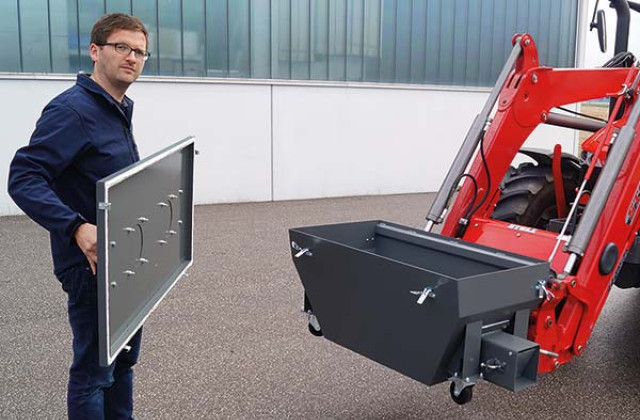
Practical ash box with Euro receptacle
The HDG ash box with Euro receptacle can be transported using standard tractors equipped with a compatible Euro interface. The mechanical emptying system can simplify ash handling, while the large filling volume of 230 litres can help reduce the frequency of emptying.
Video of the HDG Compact 30-149(E)
Find out how easy it is to heat with the HDG and experience our flexible wood chip boilers as used by our customers.
Use the entire tree with HDG!
The HDG Vario feed system and the integrated fine dust separator enable the use of approved coarser and ash-rich fuels, including certain wood chip qualities, subject to the applicable fuel specifications.
Integrated fine dust separator
The integrated fine dust separator is designed to support the use of approved ash-rich fuel qualities. As it is integrated into the boiler, only limited additional installation space is required. Fine dust collected by the separator is removed automatically and conveyed to the central ash container together with other combustion residues.
Advantages:
- Suitable for approved ash-rich fuel qualities, subject to the applicable fuel specifications
- Electrostatic separator is designed to separate fine dust particles from the flue gas stream during operation
- Thanks to integration in the boiler, only approximately 5 cm of additional installation space is required
- Automatic cleaning system for the electrode and separator surfaces
- Integrated filter ash removal into the central ash container
- Low flue gas pipe connection, suitable for many existing chimney systems
Absolute control
Perfectly regulated with the HDG Control
The new HDG Control is the intelligent control centre for your entire heating system. Whether on the large touchscreen on the boiler or via the app: With HDG Control, you always have absolute control over your heating system.

- Control of combustion and output
- Control of external heat sources
- Integration of solar thermal systems, accumulators, heating circuits, mains pumps
- Domestic hot water preparation, etc.
- On request: Full web access and app for iOS and Android
From the warehouse to the boiler
Flexible delivery system and feeding technology for every area of application
A sophisticated delivery and feeding system is crucial for the safe and reliable operation of an automatic wood heating system. With clever innovations, the new HDG Vario system sets standards here.
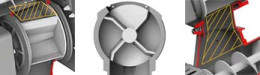
- Cut-Connection: Huge transfer opening between the auger and the rotary feeder reliably prevents material blockages
- 4-chamber rotary feeder: Combines absolute back burn protection
- with minimal component stress due to low friction surfaces
- Stoker auger with dosing container: The fuel dosage via light barrier guarantees an even material supply and constant output even with different fill levels in the warehouse
In addition, with several delivery systems for wood chips (flexi blade delivery system, hinged arm delivery system, walking floor delivery system, etc.) and pellets (suction system, auger delivery system), solutions are also available for fuel transport for every application.