





M175-240
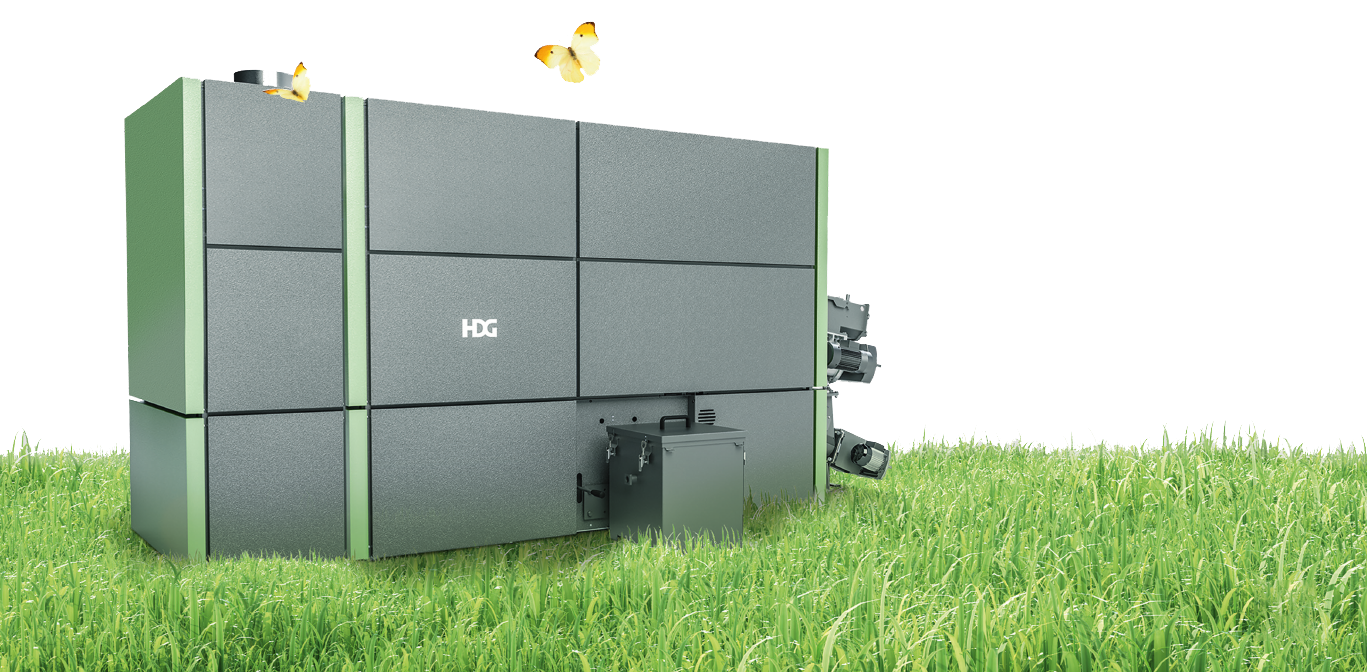
The HDG M150-240 makes cutting-edge technology available in a lower power range.
-
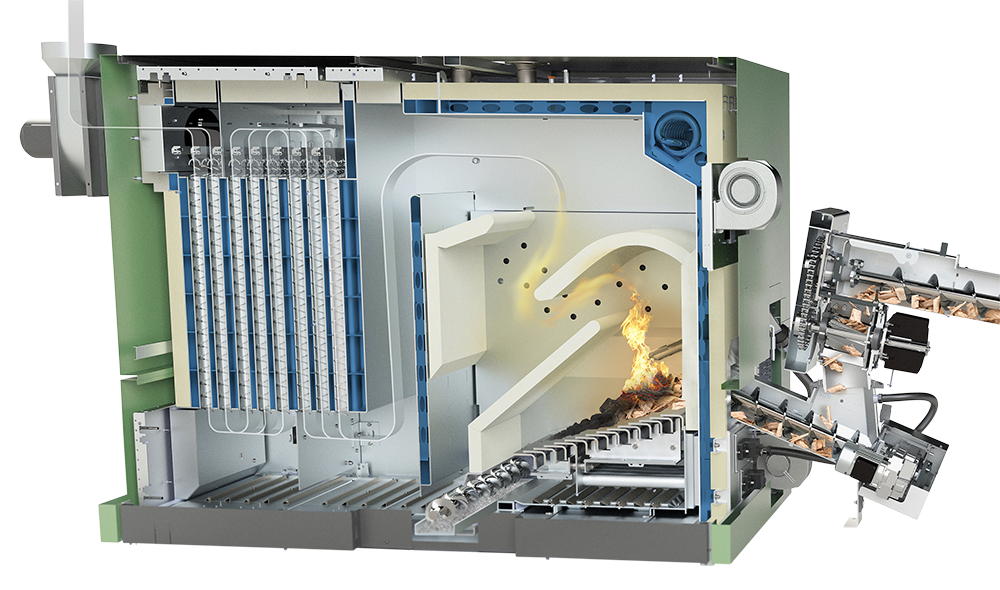
Inside view of the boiler
1
2
3
4
5
6
7
8
9
10
11
12
13
14
1 - 4-chamber rotary feeder with cut connection2 - Stoker screw with dosing container3 - Primary air fan4 - Secondary air fan5 - Automatic ignition with overfill protection6 - 2-zone stepping grate7 - Lower grate ash removal8 - Integrated central ash removal system9 - Secondary and tertiary air supply10 - Safety heat exchanger11 - Heat exchanger with automatic cleaning system12 - Lambda sensor13 - Flue gas fan with negative pressure control14 - Supply and return connections -
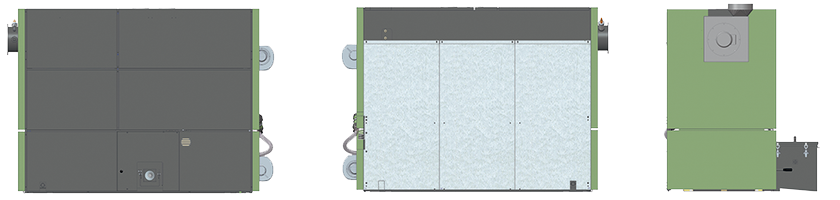
Technical data
M150
M175
M200
M240
Nominal thermal power (kW) 150 175 200 240
(220 at continuous load)Minimum thermal power (kW) 51,3 52 60 72 Flue gas temperature at nominal thermal power (°C) 160 165 180 195 Flue gas mass flow at nominal thermal power* (kg/s) 0,116 0,116/0,104 0,131/0,118 0,156/0,139 Water capacity (l) 515 515 515 515 Operating pressure (bar) 6 6 6 6 Flue draught requirement (Pa)** 5 5 5 5 Maximum flow temperature (°C) 100 100 100 100 Flue gas pipe connection (mm) 250 250 250 280 Dimensions and weight
M150
M175
M200
M240
Height without attachments (mm) 1832 1832 1832 1832 Width without attachments (mm) 2395 2395 2395 2395 Depth without attachments (mm) 1101 1101 1101 1101 Weight (kg) 2555 2555 2555 2555 * In the case of two specifications, the first refers to wood chip operation, the second to pellet operation.
** In conjunction with flue gas fan and negative pressure control.


High-volume technology in a compact format
With the HDG M150-240 wood chip and pellet boiler, HDG offers technology for applications in the 150 to 240 kW output range. Key features include the fully integrated fine dust separator, automatic cleaning with lower grate ash removal, and a combustion chamber geometry developed in cooperation with the Fraunhofer Institute. Boiler performance depends on operating conditions, fuel quality and system configuration.
In short: The HDG M150-240 incorporates key technology features from the HDG M300-400 series into the medium output range.
Combustion chamber temperature sensor
The combustion chamber temperature sensor provides key information for controlling fuel feed, ignition and the primary air supply. The primary air is used for pre-drying and outgassing of the fuel and supports the combustion process.
Lambda sensor
The lambda sensor measures the residual oxygen content after combustion and provides control values for the secondary and tertiary air supply. These air streams are introduced into the combustion gases at different stages of the combustion process and support combustion control.
Flue gas fan with negative pressure control
The speed-controlled flue gas fan is regulated via a negative pressure control system and maintains a defined negative pressure level in the combustion chamber. This helps compensate for variations in fuel properties and changing flue conditions.
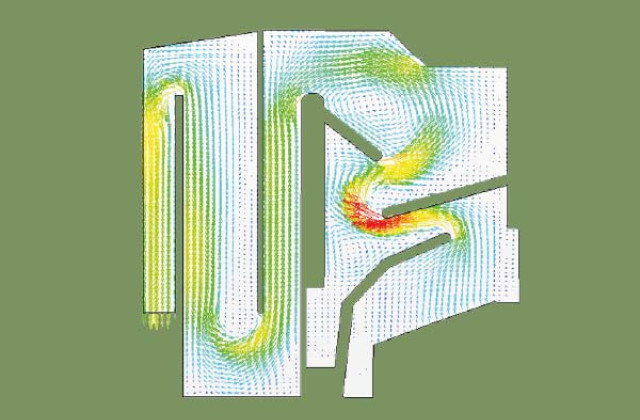
Advanced combustion chamber design
The geometry of the combustion chamber was developed in cooperation with the Fraunhofer Institute. A key element is the integrated centrifugal separator with downstream slowdown and pressure-relief zone. Due to the 180° deflection, particles contained in the flue gas stream can be separated within the combustion chamber. In addition, the combustion control system operates from the start-up phase and supports controlled combustion throughout operation.
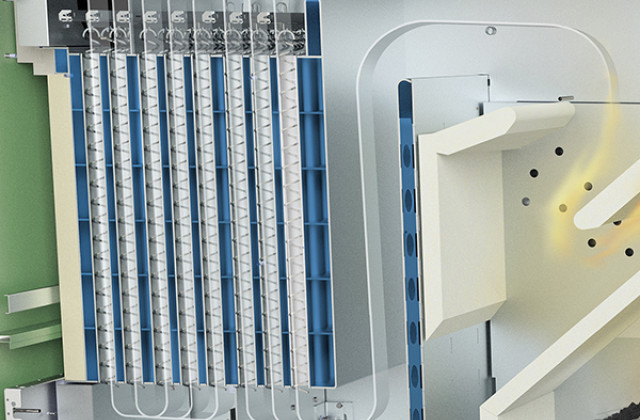
Forced-flow heat exchanger
The layered flow design of the heat exchanger supports efficient heat transfer and contributes to high efficiency. All heat exchanger surfaces are cleaned automatically, helping to reduce maintenance requirements.
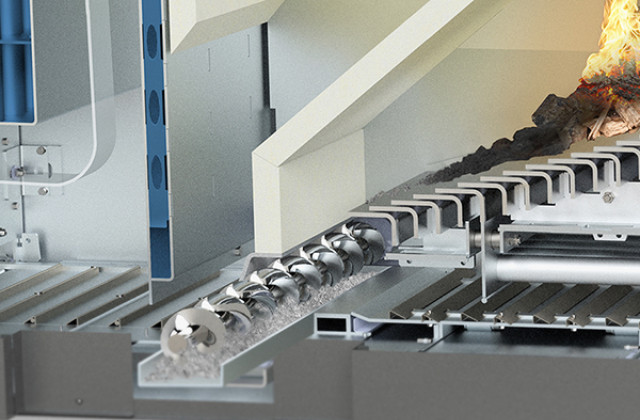
Convenient operation and maintenance
In normal operation, the HDG M150-240 is designed for low-noise operation. The integrated central ash removal system, including the lower grate ash removal system for combustion ash, together with automatic cleaning of the heat exchanger surfaces, supports routine operation and helps reduce manual cleaning and maintenance effort. A range of ash removal systems is available to meet different application requirements.
Video of the HDG M150-240 with Vario feeding system
Find out how easy it is to heat with the HDG and experience our flexible wood chip boilers as used by our customers.
Use the entire tree with HDG!
The use of wood chips with varying ash content and particle characteristics can place particular demands on a heating system. The integrated fine dust separator supports the use of approved ash-rich fuel qualities, subject to the applicable fuel specifications.
Advantages:
- Suitable for approved ash-rich fuel qualities, subject to the applicable fuel specifications
- Electrostatic separator is designed to separate fine dust particles from the flue gas stream during operation
- Complete integration in the boiler with low additional space requirements
- Automatic cleaning system for the electrode and separator surfaces
- Integrated filter ash removal into the ash container

Fine dust particles flow through the exhaust duct with the exhaust air. A high-voltage electrode is used to release electrons
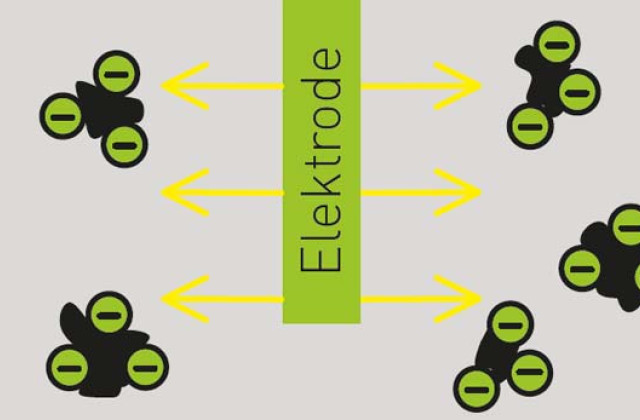
Electrostatic forces move the electrons to the chimney wall. In doing so, the fine-dust particles are charged and also moved to the wall.
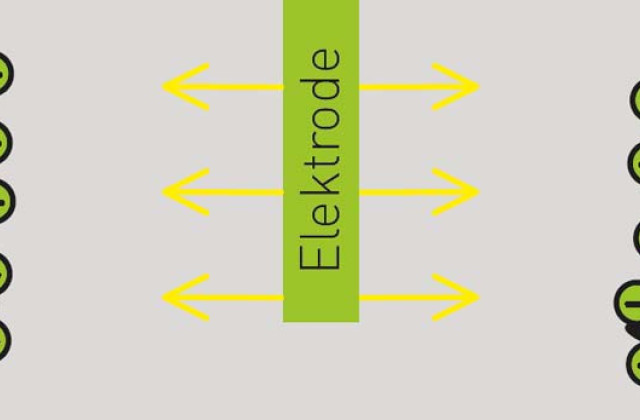
The fine dust collects on the wall and clumps into coarse flakes. These deposits are removed by the automatic cleaning system.
Absolute control
PLC combustion technology and system control with HDG Control
For control, we rely on the combination of PLC control and the new HDG Control::
PLC combustion technology
- Continuous determination of reference variables via combustion chamber temperature sensor and lambda sensor
- Constant adjustment of the optimum air and fuel quantity
- Capacity control according to strict specifications ("QM heating plants")
- Open for extensions (Mod-Bus, etc.)

HDG Control
- Integration of external heat sources, solar thermal systems, accumulators, heating circuits, mains pumps, domestic hot water preparation, etc.
- Control of cascade systems and local heating networks
- On request: Full web access and app for iOS and Android
From the warehouse to the boiler
Flexible delivery system and feeding technology for every area of application
A sophisticated delivery and feeding system is crucial for the safe and reliable operation of an automatic wood heating system. With clever innovations, the new HDG Vario system sets standards here.
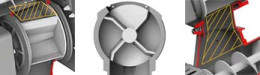
- Cut-Connection: Huge transfer opening between the auger and the rotary feeder reliably prevents material blockages
- 4-chamber rotary feeder: Combines absolute back burn protection with minimum component stress due to low friction surfaces
- Stoker auger with dosing container: The fuel dosage via light barrier guarantees an even material supply and constant output even with different fill levels in the warehouse
In addition, with several delivery systems for wood chips (flexi blade delivery system, hinged arm delivery system, walking floor delivery system, etc.) and pellets (suction system, auger), solutions are also available for fuel transport for every application.
Out of the boiler – into the bin
The right ash removal solution for every area of application
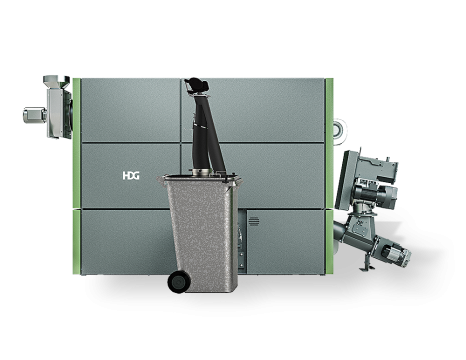
Depending on the area of application, various ash containers can be used. We work together with you to plan an individual solution.
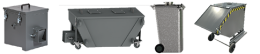
- 80 litre ash box: Ideal for pellet operation and in confined spaces
- 230 litre ash box with Euro interface: Ideal for agricultural enterprises. Can be transported using the front loader.
- 120 or 240 litre ash bin: Ideal if the ashes are disposed of by a disposal company.
- 400 litre dump body: Large volume for industrial use. Can be transported using the forklift truck.